



The fight over regulation methods Cryptocurrency In the US, he entered a new stage in the Senate. Twelve Democrats are pushing Republicans to take part in actually writing the Crypto Market Structure Bill, rather than commenting on the GOP draft proposal. Their demand underscores the high interests of this law. SEC and CFTCrestructure digital assets monitoring and set road rules for exchange with investors.
Democrats want real collaboration
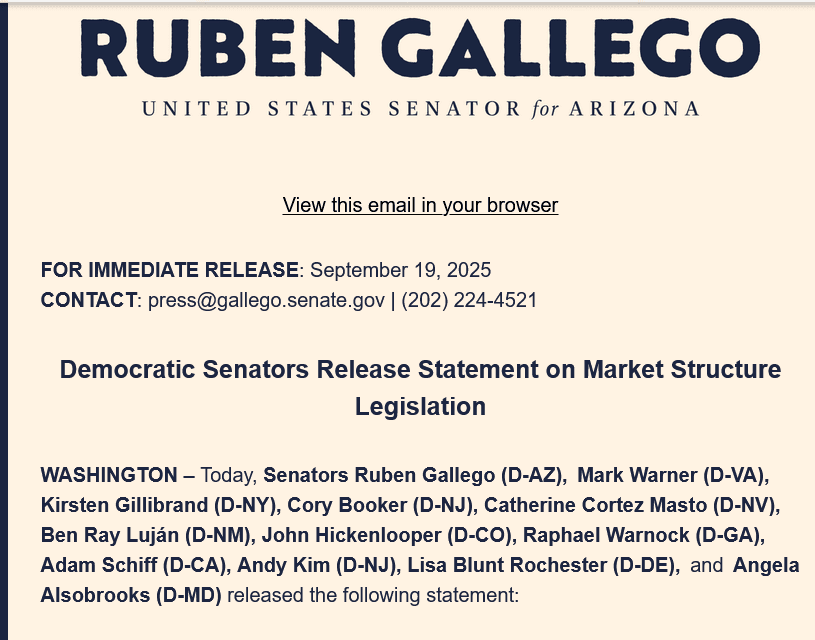
A group of 12 Senate Democrats A statement has been issued It urges Republicans to allow bipartisan authors of the Crypto Market Structure Act to move around Congress. Lawmakers stressed that such a drastic regulatory bill should not be created by a single party alone. They emphasized that bipartisan authors are historically the norm for laws of this scale, and argued that meaningful collaboration is needed for reliability and speed.
Who signed the statement?
Signatories include some of the most active democratic voices on digital assets. It includes Kirsten Gillibrand of New York, Corey Booker of New Jersey, Reuben Gallego of Arizona, and Mark Warner of Virginia. The group previously introduced a 7-pillar framework to regulate the crypto market, demonstrating its intention to shape the debate rather than simply responding to Republican proposals.
GOP Bill and Clear Law
Republican-led draft, Clear actionshas already passed the House of Representatives and is currently under review in the Senate. The bill directs the Securities and Exchange Commission (SEC) and the Commodity Futures Trading Commission (CFTC) to establish a Joint Committee on Regulatory Harmony. This is an attempt to bridge the gap between the two agencies, taking a variety of stances on how to classify and oversee digital assets.
The Democratic Party’s Alternative Vision
The democratic framework takes a different approach. This will allow CFTC to explicitly empower the spot market for non-security tokens and create a process that determines when the token falls under SEC jurisdiction. Their proposal also calls for a conflict of interest and banning the launch or profit of crypto projects while elected officials and their families while in office. Additionally, they are seeking more funds for financial regulators to handle the complexities of the crypto market.
The role of the Senate Committee
Another important point for Democrats is coordination with the Senate Agriculture Committee, which oversees the CFTC. They argue that the committee must play a central role in shaping cryptography oversight. Senate bank Republicans reportedly left the door open to receive input until October 20th, although the committee was not locked in that schedule.
Political undercurrents
The call to limit government officials from profiting from crypto provides a sharp political advantage even during their tenure. This is because President Donald Trump has significantly increased his wealth through Crypto Ventures during and after his tenure. For Democrats, this is not only about market stability, but also about addressing the perceived ethical risks associated with civil servants engaged in private crypto trading.
What happens next?
In the coming weeks, we will test whether Republicans are willing to open the drafting process to bipartisan input. If a clear act progresses without change, Democrats can stop and push back their revision or committee progress. The results could shape the future of US crypto regulation over the years, deciding whether the market will operate under a balanced framework or what is shaped primarily by one vision.
