



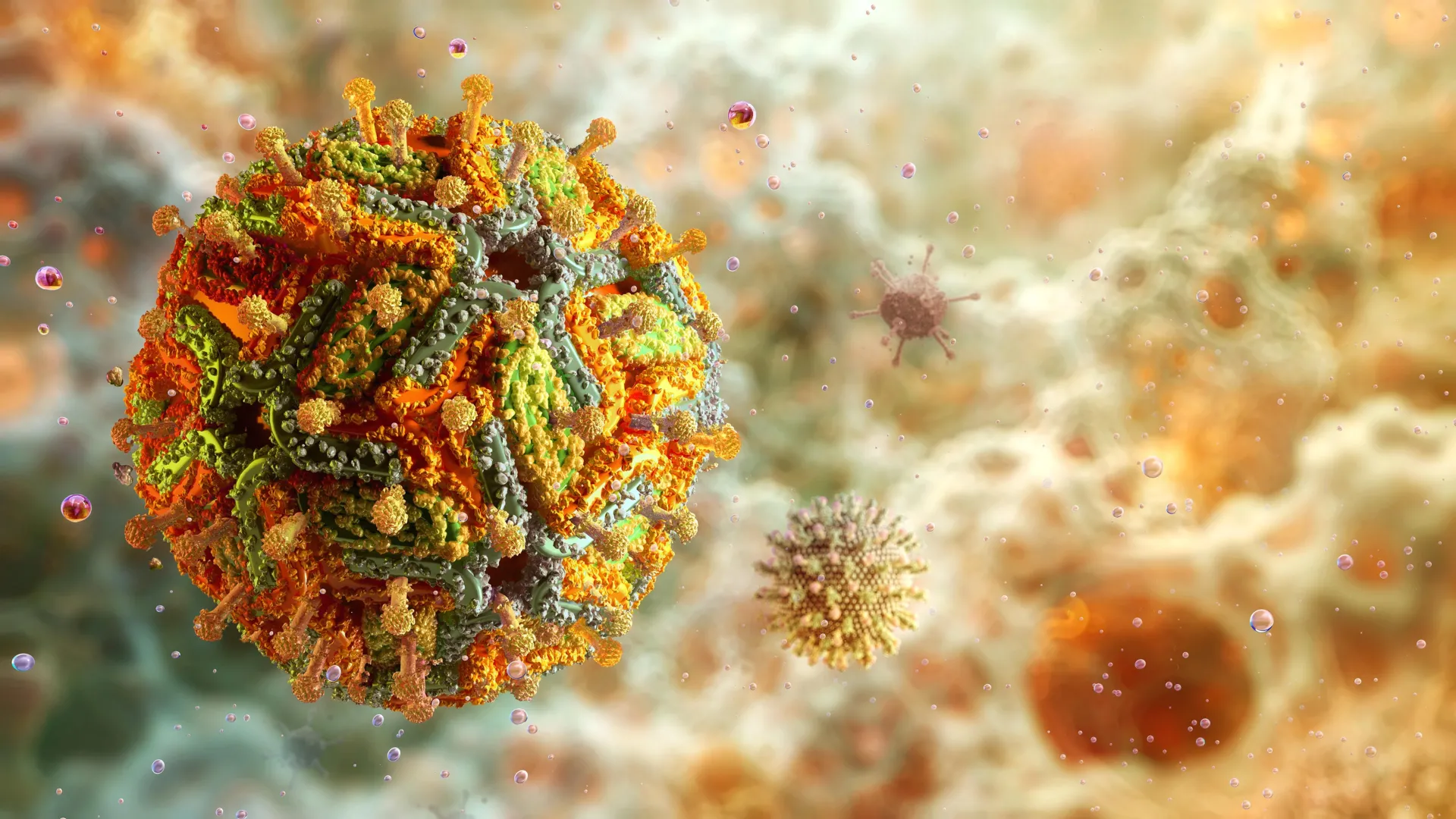
Researchers at the University of Queensland have produced the first detailed, high-resolution images of the yellow fever virus (YFV). Yellow fever is a mosquito-borne infection that can severely damage the liver and is potentially fatal.
Their work uncovered clear structural distinctions between the long-used vaccine strain (YFV-17D) and the strains responsible for serious illness.
Capturing the Virus in Near-Atomic Detail
According to Dr. Summa Bibby of UQ’s School of Chemistry and Molecular Bioscience, scientists have studied yellow fever for many decades, yet this is the first time a complete 3D model of a fully mature yellow fever virus particle has been captured at near-atomic resolution.
“By utilizing the well-established Binjari virus platform developed here at UQ, we combined yellow fever’s structural genes with the backbone of the harmless Binjari virus and produced virus particles that could be safely examined with a cryo-electron microscope,” Dr. Bibby said.
She explained that the vaccine strain appears smooth and stable at the surface, while the virulent strain has a noticeably uneven, textured exterior.
How Surface Structure Shapes Immune Recognition
These differences influence the way the immune system identifies the virus.
“The bumpier, irregular surface of the virulent strains exposes parts of the virus that are normally hidden, allowing certain antibodies to attach more easily,” Dr. Bibby said.
“The smooth vaccine particles keep those regions covered, making them harder for particular antibodies to reach.”
Implications for Vaccines and Global Health
Yellow fever continues to pose a significant public health threat in areas of South America and Africa. Because there are no approved antiviral treatments, vaccination remains essential for prevention.
Professor Daniel Watterson noted that the new findings offer important insights into the biology of yellow fever and could guide the development of improved vaccines and antiviral tools for this virus and other orthoflaviviruses.
“The yellow fever vaccine remains effective against modern strains and seeing the virus in such fine detail lets us better understand why the vaccine strain behaves the way it does,” Professor Watterson said.
“We can now pinpoint the structural features that make the current vaccine safe and effective.
“The findings could even inform future vaccine design for related viruses like dengue, Zika and West Nile.”
The research was published in Nature Communications.
