



TLDRs;
Rivian beats Q4 earnings and posts first annual gross profit, yet investors worry about overvaluation and cost pressures.
Volkswagen joint venture provides capital and technical support for R2 SUV launch, conditional on performance milestones.
High projected 2026 losses and stretched stock valuation keep investors cautious despite strategic partnerships.
Rivian’s partnership strategy aligns with industry trends, but execution risks remain amid high-profile EV tech tie-up failures.
Get live prices, charts, and KO Scores from KnockoutStocks.com, the data-driven platform ranking every stock by quality and breakout potential.
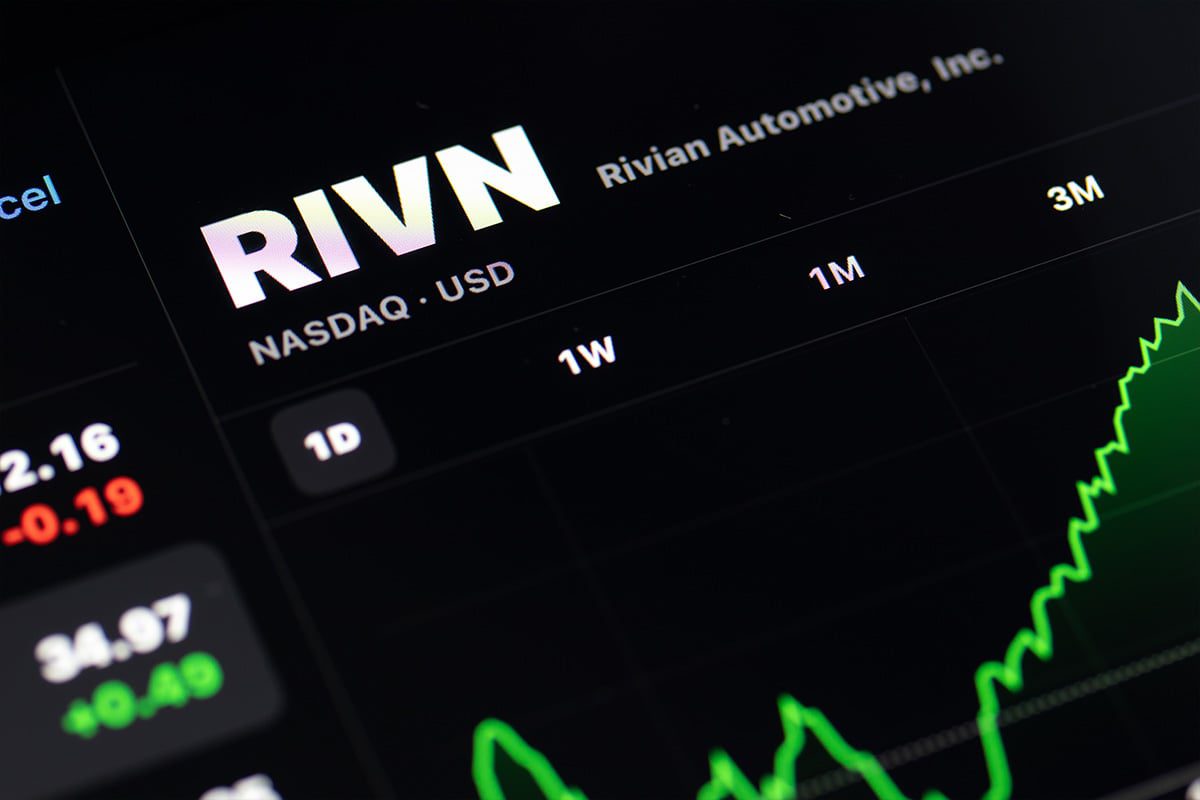
Rivian Automotive Inc. (RIVN) saw its shares decline nearly 6% in early trading on Monday, despite reporting stronger-than-expected fourth-quarter earnings and ambitious production targets for 2026.
Rivian Automotive, Inc., RIVN
Investors expressed caution over the company’s stretched valuation and the high costs associated with its planned growth, signaling a market reassessment of the electric vehicle (EV) maker’s near-term prospects.
Strong Q4 Beat Not Enough for Investors
Rivian posted better-than-anticipated Q4 results, with revenue for 2025 reaching nearly US$5 billion, an 8% increase from the previous year. The company also reported its first annual gross profit of US$144 million, while net losses improved to US$3.6 billion.
The electric vehicle manufacturer projected production of 62,000 to 67,000 units in 2026, a 47% to 59% increase from 2025, driven by the upcoming launch of its R2 SUV in the second quarter. By 2027, Rivian expects the R2 to account for the majority of its deliveries as its Illinois production facility ramps up output.
Despite these optimistic metrics, traders remain wary. The stock had surged roughly 46% in the 30 days prior to the earnings announcement, creating concerns that shares may be priced beyond fair value. Some analysts estimate Rivian’s fair value at US$15.75 per share, compared to recent trading levels near US$21.75.
Volkswagen Partnership Supports Growth
Rivian’s expansion plans are underpinned by a strategic joint venture with Volkswagen Group, which has increased its planned investment to as much as US$5.8 billion. This funding supports both the R2 SUV launch and the scaling of production at Rivian’s Illinois plant.

The equity payments are milestone-dependent. A US$1 billion payment in 2025 requires either two nonconsecutive quarters with at least US$50 million in gross profit or two consecutive profitable quarters, with no payout before June 1. Rivian can also earn an additional US$460 million after the first Volkswagen vehicle using the joint venture’s technology enters production.
Valuation Concerns Temper Enthusiasm
While Rivian’s Q4 earnings beat expectations, market skepticism persists due to the company’s high projected losses for 2026, estimated between US$1.8 billion and US$2.1 billion, alongside roughly US$2 billion in capital expenditures. Investors worry that the aggressive expansion plan may not translate into immediate profitability.
Rivian tops Q4 expectations, expects losses to continue amid production increase https://t.co/BqtlQxSmb7
— CNBC Tech (@CNBCtech) February 12, 2026
The stock’s recent rally has also raised questions about valuation sustainability. Even as Rivian aligns with Volkswagen and other legacy automakers to license its zonal electrical architecture, an innovative EV design simplifying electronics and software updates, market participants remain cautious about long-term returns.
Industry Partnerships Reflect Shifting EV Strategies
Rivian’s collaboration with Volkswagen mirrors a broader industry trend where established automakers partner with EV startups to gain access to advanced technologies rather than developing them internally. While such partnerships offer strategic advantages, they also carry risks, as seen in previous large-scale deals that ultimately unraveled, including the US$2.6 billion Volkswagen-Ford autonomous vehicle venture.
Rivian’s stock drop highlights the delicate balance between delivering ambitious growth and satisfying market expectations. While the company shows promise with its R2 SUV and revenue gains, investors are taking a measured approach in light of high costs, stretched valuation, and execution risks in the evolving EV sector.
