

TLDR
Bithumb has shut down its USDT market following a regulatory probe by the Korea Financial Intelligence Unit.
The exchange ended its order book sharing partnership with Australia’s Stellar Exchange after only two months.
The closure affected ten cryptocurrencies which remain available for trading in Korean Won.
All pending orders in the USDT market were canceled and related API services were suspended.
The FIU investigation focused on potential anti-money laundering risks and compliance with the Travel Rule.
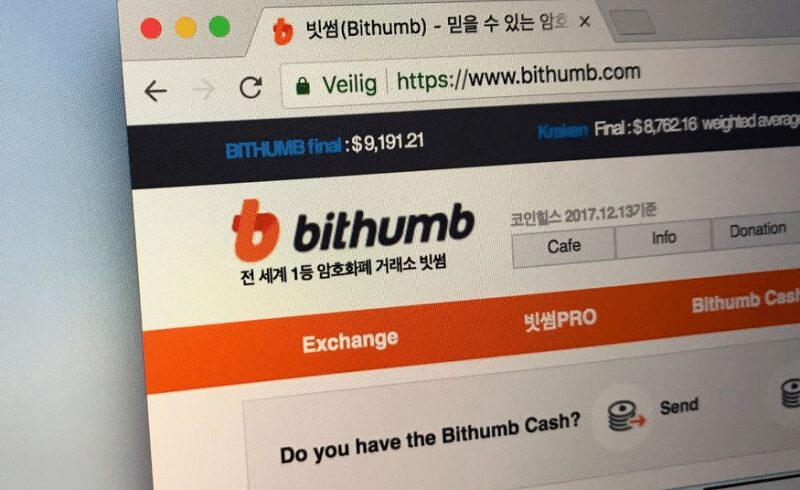
Bithumb has officially closed its USDT market after regulatory concerns triggered an investigation by South Korean authorities. The closure, effective Friday at 11:00 AM, affected ten cryptocurrencies and ended order book sharing with Stellar Exchange. The decision follows an extended probe by the Korea Financial Intelligence Unit (FIU) into Bithumb’s anti-money laundering systems.
Bithumb Ends Order Book Integration with Stellar
The partnership between Bithumb and Australia-based Stellar Exchange began on September 22, 2025, through a USDT market beta program. This arrangement allowed shared order books, offering users increased liquidity and access to deeper markets.
The FIU initiated an on-site investigation at Bithumb’s Seoul office on October 1, 2025. Authorities focused on whether cross-border integration weakened anti-money laundering protocols and compliance with South Korean laws.
During the investigation, concerns emerged over shared operations between Bithumb and Stellar Exchange, which is linked to Singapore-based BingX. Reports confirmed that BingX employees worked directly from Bithumb’s local office during the partnership.
Compliance Issues and Regulatory Scrutiny
Regulators expressed concerns about Know Your Customer (KYC) procedures and the enforcement of the Travel Rule during joint operations. This rule requires exchanges to record and share personal transaction data to prevent illicit financial activity.
The FIU reviewed whether Bithumb’s cross-border cooperation met the country’s standards on user protection and transaction monitoring. Officials examined whether shared platforms created gaps in KYC and anti-money laundering frameworks.
A Bithumb spokesperson stated, “We aim to offer a stable trading environment through system improvement.” The exchange emphasized that system upgrades motivated the decision but did not confirm a relaunch timeline.

Market Closure Affects Ten Coins
The shutdown impacted ten cryptocurrencies paired with USDT, though these remain tradable against the Korean Won. Bithumb confirmed that all pending orders in the USDT market were canceled at the time of closure.
Trading via API has also been suspended for the USDT market. However, deposits and withdrawals for the affected coins remain operational for all users.
The exchange has not disclosed any compensation for users affected by the order cancellations. Bithumb noted that further updates will be communicated on its official platform if services resume.
Regulatory Investigation Prolonged Timeline
Industry officials said the FIU’s review exceeded the standard duration for such audits. The extended probe increased pressure on Bithumb to meet regulatory expectations swiftly.
Officials focused heavily on how Bithumb managed shared order books with foreign platforms. They reviewed potential risks in asset tracing and user verification procedures.
South Korea’s Financial Services Commission enforces rules under the Act on the Protection of Virtual Asset Users. These laws demand strict standards for digital asset custody and exchange operations.
The partnership drew more attention after links between Bithumb, Stellar Exchange, and BingX surfaced. This raised new questions about control and oversight under South Korea’s regulatory framework.
Bithumb concluded all USDT-related trading operations on Friday without delay. The closure aligns with regulatory expectations following the completion of the on-site investigation.
The exchange has shifted its focus to enhancing its platform and ensuring future compliance. All affected users can still manage their assets through KRW markets and standard withdrawal functions.
