



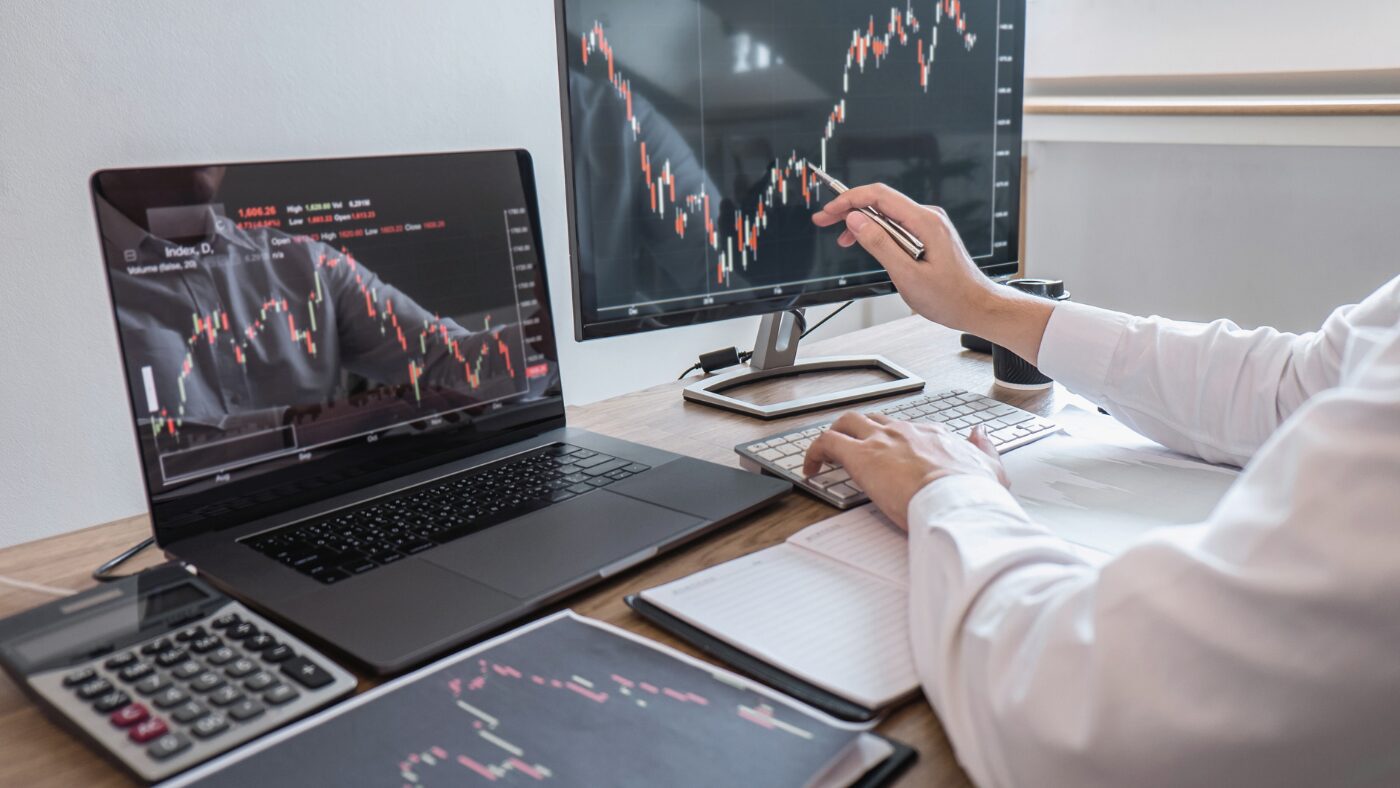
Why year-end transaction reviews are important
Post-mortem analysis is an essential part of trading. If you don’t check your results, you may repeat your mistakes without realizing it. It can be an arduous and sometimes painful process, but you have to put in the effort if you want to become a good trader.
There’s a reason top athletes review match footage, especially after a bad loss. This will lead to growth in future games.
Think about the last five years in the market. We’ve experienced a pandemic-driven crash, a massive stimulus-driven rebound, aggressive Fed rate hikes, and sector rotations that caught many traders off guard.
Markets are unpredictable, and traders who fail to adapt become liquidity for those who do. What worked this year may not be as effective next year.
Year-end trading reviews are an opportunity to assess performance, identify emotional patterns and behaviors, and set goals for improvement. Whether you use a trading journal, spreadsheet, or specialized software, the discipline of reviewing your trades is what separates the consistent winners from the rest.
What you will achieve:
Reveal the truth of your trading with objective statistics Identify profitable patterns and eliminate costly mistakes Create a model book of the year’s best settings for future reference Create practical rules to implement in the new trading year
Step 1: Calculate trading statistics
Calculating trading statistics reveals the objective truth about performance. Numbers don’t lie. This data forms the basis for everything else in your year-end transaction review.
Without this baseline, you’re just guessing at what’s working.
Core metrics to calculate
Let’s start with these important statistics that every swing trader and position trader should know.
Batting average: Percentage of winning trades Average gain: Average result of profitable trades (both % and $) Average loss: Average result of losing trades (both % and $) Average holding period (winners): How long to hold a profitable position Average holding period (losers): How long to hold a losing position Profit/loss ratio: Average profit divided by average loss
The real power comes when you can calculate these statistics based on each setting you trade and the time of day you run it. This allows you to see clear trends in profitability.
For example, you may find that breakout trades have a higher winning rate in the first hour of trading, or that swing trades entered on a pullback to a 21-day moving average perform better.
Additional metrics worth tracking
Consider tracking the state of the market when each setup occurs. Has the upward trend been confirmed? Is it a correction?
Understanding how strategies work in different market conditions will help you know when to press and when to defend.
Remember: You can go as deep as you want, but just calculating these basic stats will help you better understand your year and highlight areas for improvement.
Step 2: Check your capital curve compared to the market
The equity curve tells the story. Just like analyzing a stock chart, you need to step back and look at the overall characteristics of your account’s performance.
A smooth, steadily rising capital curve indicates consistent execution and good risk management. An unstable curve with large spikes and drops suggests areas that require attention.
How to analyze the equity curve
Plot the equity curve from your broker against the S&P 500 and Nasdaq Composite Index. This comparison reveals the following key insights:
Assessing volatility: Are your lines very jagged with lots of jumps and drops? If so, you may need to improve your risk management and set up more disciplined profit-taking rules. Market correlation: Does the equity curve move in lockstep with the market, or does it exhibit independence? The best traders often flatten out and limit drawdowns when the market corrects. Drawdown Analysis: How deep is the pullback? The goal is to smooth the asset curve and protect profits during difficult times.
A sharp rise in stock prices? Analyze your best period:
What position were you holding when you made the biggest profit? What was the market environment like? Were you using specific settings? Please note the factors that led to these benefits so you can reproduce the situation.
Stock decline? Check out the drawdown:
Have you tried a new configuration and it didn’t work? Have you been using multiple expansion stocks at once? Have you been fighting market trends? Identify the causes so you can eliminate them in the future.
Goal: Maximize the frequency of spikes in the stock curve while eliminating dips. Ideally, the stock curve should rise during an uptrend in the market and flatten out during corrections instead of falling.
Step 3: Analyze the 10 best and 10 worst trades
This is where the real learning happens. For your year-end trade review, select your best and worst performing trades and consider them carefully.
The goal is not to congratulate yourself or blame yourself. To derive actionable insights.
Evaluate actions, not results
This is important. Just because a trade ends up losing doesn’t necessarily mean it was a bad trade. Conversely, if you win on a wrong trade, it’s still a bad trade and you just got lucky.
Review the decisions you made and consider whether they were the right decisions at the time, based on the information available.
Did you follow the entry rules? Was the size of your position appropriate for your setup? Did you stick to your stop loss? Were you able to manage your positions as planned? How was your mental state during the trade?
Review method: Play each trading bar bar by bar and try to learn something from each bar. Watch your charts as if you were trading in real time. Would I make the same decision again? If you have time, review as many trades as possible, not just the top 10 and bottom 10.
Pay special attention to the biggest losers. What went wrong? Poor risk management, ignoring an outage, or just bad luck with a good setup? The biggest losers often reveal the most important lessons.
Similarly, look at the biggest winners. Are there any commonalities that you can identify and repeat?
Key question: Did poor risk management lead to significant losses? If so, commit to implementing rules to prevent that from happening again, and make sure you actually follow them.
Step 4: Create an annual reader model book
In addition to reviewing your trades, you need to create an annual model book. This is one of the most valuable exercises for developing pattern recognition and improving your ability to identify future leaders.
How to create a model book
Pick the 10-30 best-performing stocks this year and study each chart as if you were trading in real time. Treat these as if they were real transactions.
Mark where you would have entered based on your criteria Define stop losses and position sizing Plan how to manage the position Identify optimal exit points Be intellectually honest about what you actually do
Leaders to consider in 2025 – Examples of names worth considering:
Examples of major stocks worth studying as a model book for 2025 are: HOOD, SNDK, PLTR, MU, AVGO, CRWV, IONQ, RKLB, RBLX, ASTS, OKLO, IREN. These names exhibit strong leadership traits and provide excellent learning opportunities.
As you consider these leaders, ask yourself the following: Have you swapped all these names? If not, why not?
Did these stocks slip past your normal routine and scans? Did they catch you off guard before the market opened? Did you miss out on their optimal entry time? Did you sell too early and miss out on a big move?
Create new rules or implement new processes needed to catch these leaders in the future. The model book becomes a reference guide for recognizing similar setups in real time.
Step 5: Identify trading strengths and weaknesses
We needed to do this through the previous four steps, but we will now formally summarize our considerations. This final step of the year-end transaction review transforms insights into actionable improvements.
Questions for deep thinking
Put the results in context. Honestly ask yourself the following questions:
How has this year been overall for your trading style? Did they push too hard when the market wasn’t cooperative? Have you been watching your positions too closely, leading to premature exits? Have you overtraded or forced a setup when it wasn’t there? Have you respected your stops, or have small losses turned into big losses? What has been your biggest emotional challenge? Have you consistently followed your trading rules?
Strengths – What worked well?
Identify the strategies, setups, and actions that contributed to your best trades. Let’s strengthen these further. Create rules to help you repeat successful patterns more consistently.
Weaknesses – areas for improvement?
Be honest about where you struggled. Create specific rules to deal with frequent mistakes. Awareness is the first step, but remember that it is action that creates change.
Based on your review, set specific, measurable, achievable, relevant, and time-bound goals for the coming year. Don’t expect to solve all your problems overnight. This is an ongoing process and the goal is to gradually improve.
Set new year goals
Based on your review, set specific, measurable, achievable, relevant, and time-bound goals for the coming year. Don’t expect to solve all your problems overnight. This is an ongoing process and the goal is to gradually improve.
Example goals:
Cut all losses by up to 7% – no exceptions Check your trading statistics every month, not just every year Add at least 20 new charts to the model book Reduce the average holding period of losing trades Improve your profit-loss ratio from 2:1 to 3:1
Also consider your daily routine. Does it help you stay alert and focused during crucial trading hours, but also allows you to back off if the odds are against you?
Think about habits that may promote trading success, such as maintaining a consistent diary habit or conducting regular performance reviews.
Key points of year-end trading review
Overall, your annual postmortem routine should be simple enough to be practical and comprehensive enough to provide actionable insights. Traders who embrace this commitment and truly enjoy the process of improvement are the ones who achieve consistency over time.
Establish an objective baseline by calculating key trading statistics such as batting average, average profit/loss, holding period, and profit/loss margin. Compare your capital curve to the S&P 500 and Nasdaq to identify volatility issues and determine whether you are protecting capital during corrections. Review your best and worst trades by evaluating actions, not just results. Play them bar by bar to extract practical lessons. Create a model book of this year’s top stocks to hone your pattern recognition and identify why you missed out on certain winners. Set specific, measurable goals for the new year based on the strengths and weaknesses you’ve identified. Make sure your review is simple enough to be practical to complete, but comprehensive enough to provide actionable and implementable insights.
Please remember. You get what you invest. The time you invest in year-end trade reviews will pay dividends throughout the next year. It’s all about building a foundation for future success.
The world’s top traders continually refine their processes, learn from their mistakes, and adapt to changing market conditions.
